Explore the types of access equipment commonly used in telecoms projects and how choosing the right hire partner can help keep your project on schedule.
The telecommunications industry relies on safe, reliable access equipment to keep the UK’s communication networks running. From installing fibre broadband and maintaining mobile phone masts to repairing overhead cables and upgrading network infrastructure, many telecommunications projects require engineers to work safely at height.
Choosing the right access equipment is essential for completing work efficiently while protecting both operatives and the public. Whether you’re carrying out routine maintenance or delivering a major infrastructure project, the correct Mobile Elevating Work Platform (MEWP) can make all the difference.
In this guide, we explore the types of access equipment commonly used in telecoms projects and how choosing the right hire partner can help keep your project on schedule.
Why Telecoms Projects Require Specialist Powered Access
Telecommunications work often takes place in challenging environments. Engineers may need to access equipment mounted on buildings, poles, towers or roadside infrastructure, frequently in confined spaces or alongside live traffic. Projects can range from installing fibre optic networks and upgrading mobile phone masts to repairing overhead communication cables, fitting CCTV systems and maintaining wireless communications equipment.
Because every site presents different challenges, choosing the right access platform and provider, is critical to completing work safely and efficiently.
Choosing the Right Access Platform
Every telecoms project has its own requirements, with factors such as working height, available space, ground conditions and the surrounding environment all influencing the best choice of equipment.
Truck-Mounted Access Platforms
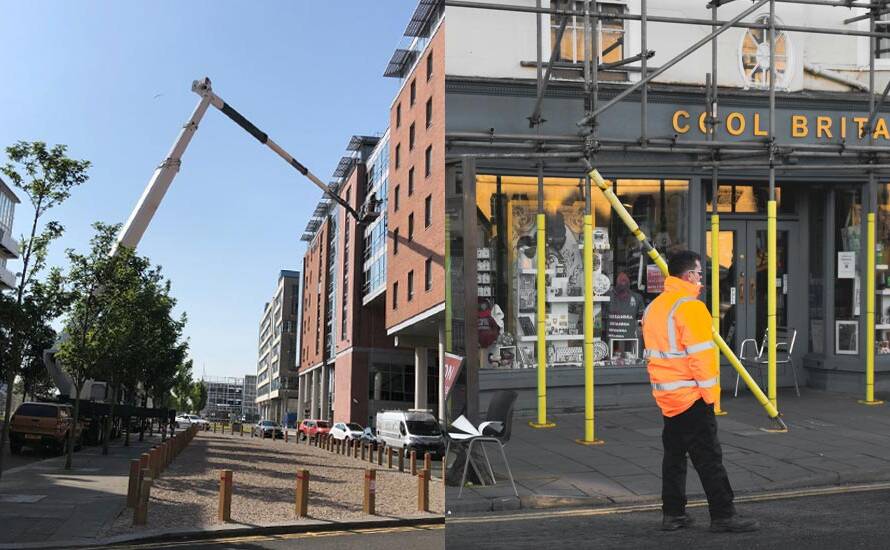
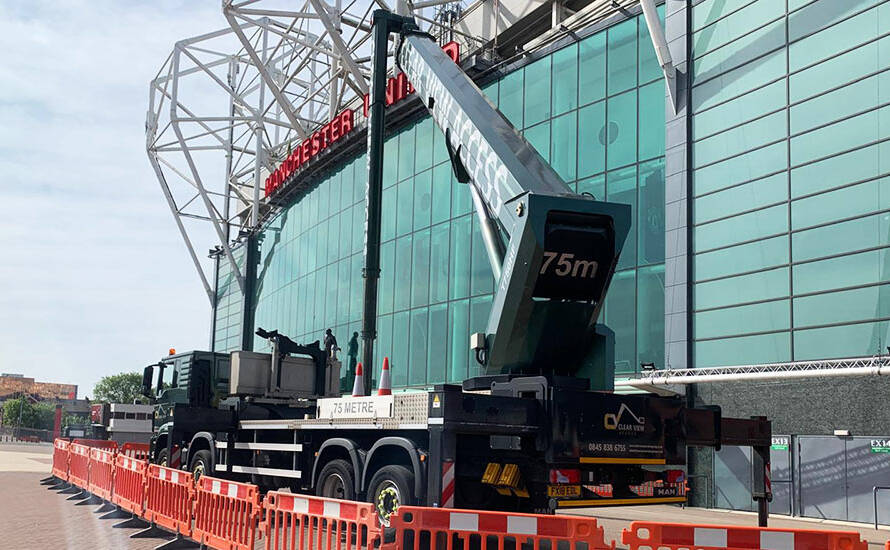
Truck-mounted access platforms are widely used across the telecoms industry because they combine excellent working height with the flexibility to move quickly between locations. This makes them ideal for projects such as fibre network installations, roadside cabinet maintenance, overhead cable inspections and emergency callouts, where engineers may need to visit multiple sites in a single day.
Their mobility helps reduce downtime, improve productivity and minimise disruption, particularly when working alongside public highways.
Track-Mounted Access Platforms
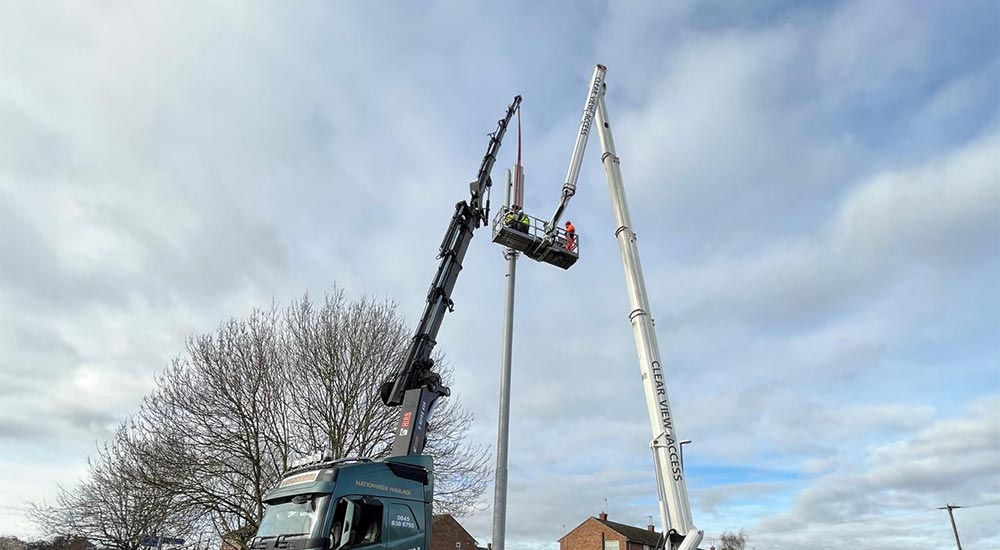
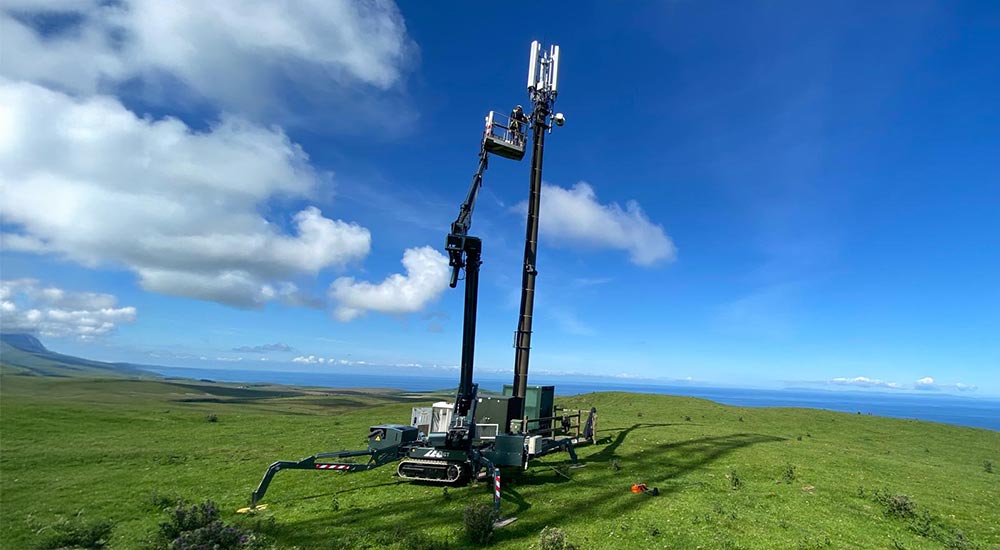
Track-mounted access platforms are designed for locations where traditional wheeled machines may struggle. Their tracked undercarriage allows them to travel across uneven, soft or sensitive ground while distributing weight more evenly, making them suitable for rural telecoms sites, embankments, difficult terrain and areas with restricted access.
Many models also offer impressive working heights while remaining compact enough to pass through narrow gateways or confined spaces, making them a practical solution for challenging environments.
Cranes for Telecom Projects
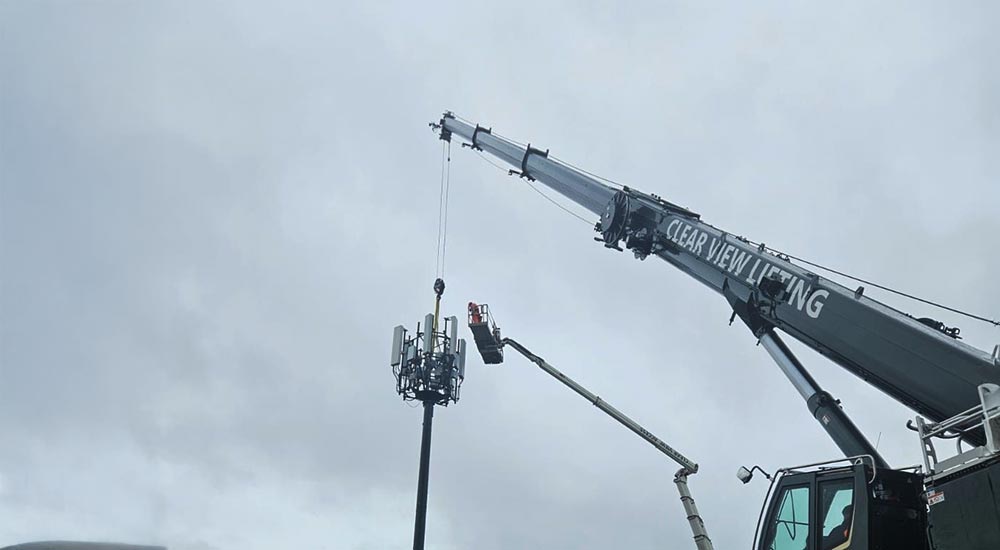
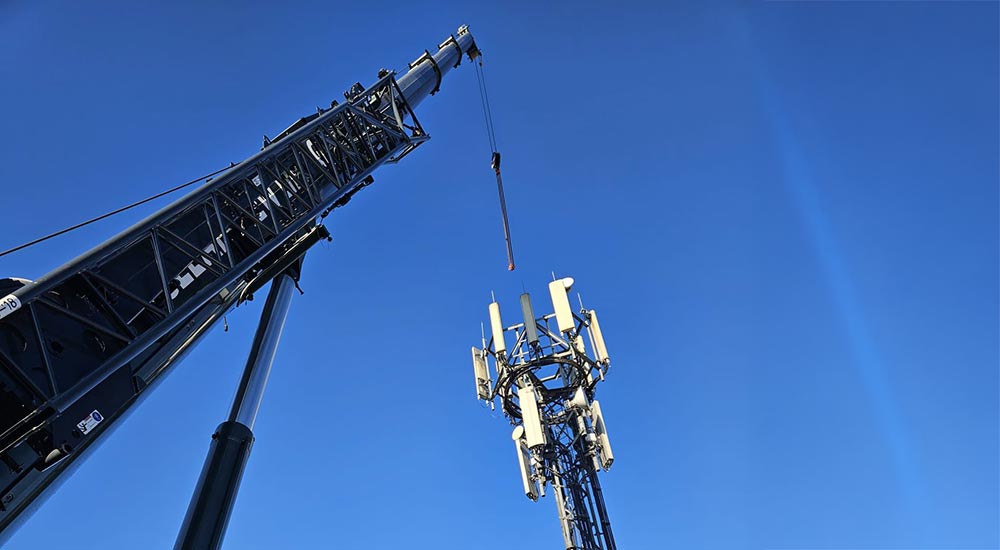
Although access platforms are the primary choice for working at height, mobile cranes also play an important role in many telecoms projects. They are commonly used when lifting heavy equipment such as communication cabins, generators, steel structures, antenna assemblies or replacement mast components into position.
Carefully planned lifting operations ensure heavy equipment can be installed safely and efficiently, particularly on larger infrastructure projects where precision and lifting capacity are essential.
Working Alongside Live Roads
A significant proportion of telecoms work takes place on or near busy roads and streets, where protecting both engineers and the public is essential. Depending on the nature of the project, temporary traffic management may be required to create a safe working environment.
Measures such as lane closures, temporary traffic lights, pedestrian diversions and safety barriers can all help reduce risk while allowing work to continue with minimal disruption. Coordinating access equipment with professional traffic management ensures that projects remain compliant and are completed safely.
Safety is Always the Priority
Working at height presents obvious risks, which is why thorough planning is essential before any telecoms project begins.
An experienced access provider will assess factors including working height, ground conditions, nearby power lines, site access, weather conditions and the presence of pedestrians or live traffic. These considerations help ensure that the most appropriate equipment is selected and that engineers can carry out their work safely.
Regularly inspected machinery, trained operators where required and careful project planning all contribute to reducing downtime and improving site safety.
Choosing the Right Hire Partner
The quality of the equipment is only part of the equation. The company supplying it should have the knowledge and experience to recommend suitable solutions, respond quickly when requirements change and support your project from planning through to completion.
When evaluating potential suppliers, consider their range of equipment, delivery capabilities, maintenance standards and ability to provide additional services where needed. A provider with experience in telecoms infrastructure will better understand the challenges involved and help ensure your project runs smoothly.
Supporting Telecommunication Infrastructure Projects
Many telecoms projects require more than access platforms alone. Larger infrastructure programmes often involve lifting operations, transport and logistics, and temporary traffic management, particularly when working on roadside installations or replacing heavy equipment.
Working with a supplier capable of providing multiple services can simplify project management, improve communication and reduce delays by ensuring all aspects of the work are coordinated effectively.
How Can Clearview Services Group Help?
At Clearview Services Group, we understand the unique demands of the telecommunications industry. Our range of access platforms and cherry pickers supports projects of all sizes, from routine maintenance and emergency repairs to major network upgrades and infrastructure installations.
But our support doesn’t stop at providing the equipment. We can offer a complete turnkey solution from start to finish, bringing together the specialist services required to deliver telecommunications projects safely, efficiently, and with minimal disruption.
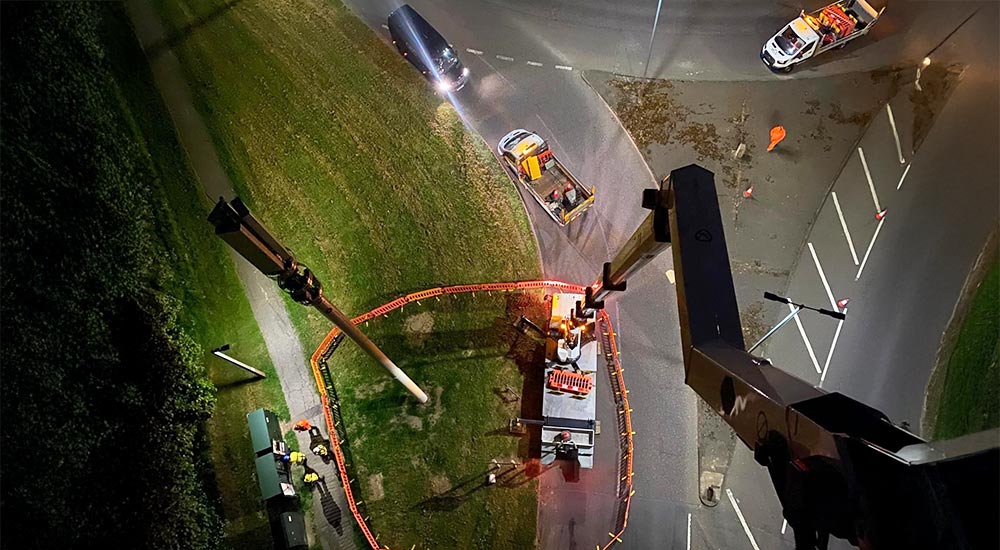
From the initial haulage and delivery of poles, structures and equipment to the lifting and installation of masts and associated infrastructure, our experienced teams can manage the entire process. Our traffic management division can also provide the necessary traffic management solutions to help protect both the public and workforce, ensuring safety remains at the heart of every project.
By bringing these services together under one roof, Clearview can take care of the whole job, providing clients with a single point of contact and reducing the need to coordinate multiple contractors.
Alongside our access equipment, we can provide traffic management, crane hire, contract lifting, haulage and specialist lifting solutions, giving our clients the flexibility to tailor the right package for each project.
Whether you’re installing new fibre networks, delivering and erecting telecoms infrastructure, maintaining communication systems or upgrading existing networks, we have the equipment, expertise and people to support the project from start to finish.
We don’t just provide the equipment, we provide the complete solution, and we do the job properly. Contact us today to find more.